Blog Categories
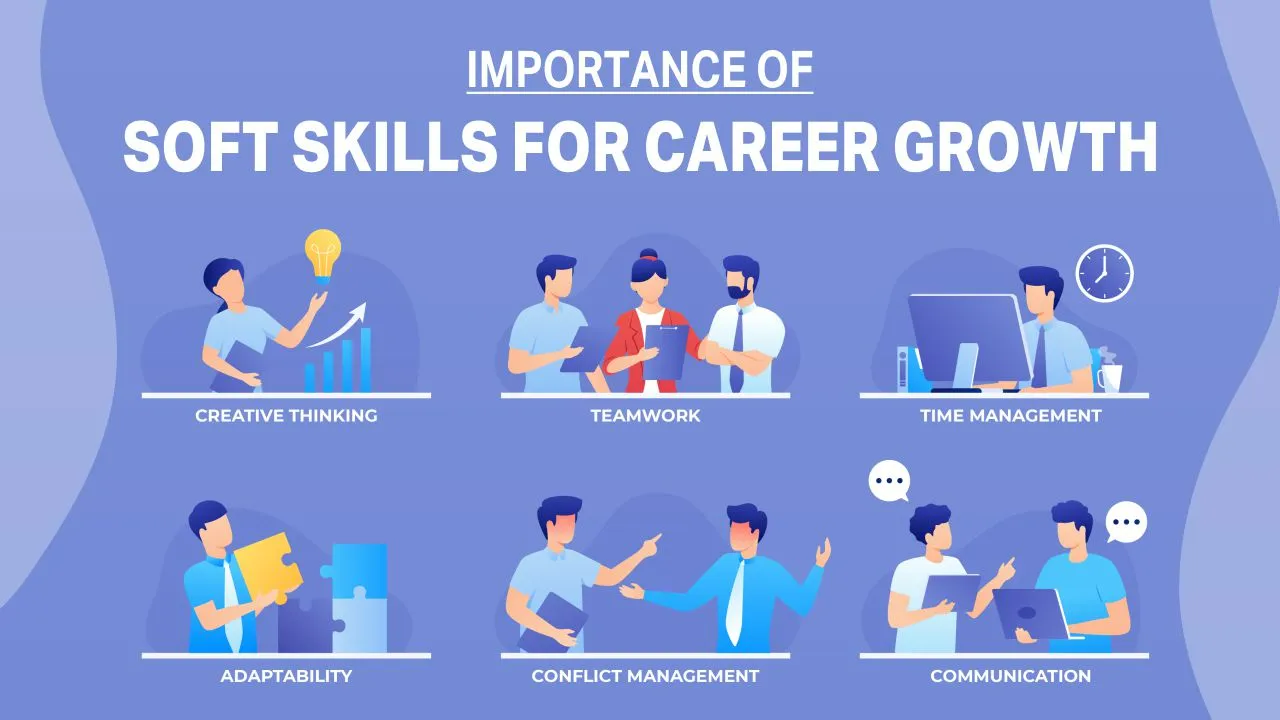
Importance of Soft Skills for Career Growth
In today’s dynamic and competitive job market, technical expertise alone is not enough to ensure career success. The importance of soft skills becomes crucial and plays a pivotal role in shaping an individual’s professional journey. These skills encompass communication, teamwork, problem-solving, adaptability, and more. They not only complement your technical knowledge but also enhance your ability to work effectively with diverse teams, navigate workplace challenges, and build strong professional relationships. Moreover, employers increasingly value candidates who can demonstrate emotional intelligence, leadership qualities, and a proactive mindset, making soft skills a key differentiator in long-term career growth and advancement. Here, we’ve explored the importance of soft skills in career growth and how developing them can pave the way for a rewarding and prosperous professional life.
Overview
| Sections | Descriptions |
| Types of Soft Skills | Key soft skills include communication and cognitive & thinking. |
| Understanding the Importance of Soft Skills | Soft skills enhance employability, improve workplace relationships, support career growth, and help individuals adapt effectively to professional environments. |
| Conclusion | Developing strong soft skills is essential for personal and professional success, complementing technical knowledge and academic learning. |
Types of Soft Skills
Below are different types of soft skills:
Communication Skills
- Verbal communication: Ability to express ideas clearly through spoken words.
- Non-verbal communication: Using body language, eye contact, and gestures effectively.
- Written communication: Communicating clearly through emails, reports, or messages.
- Active listening: Fully focusing on what others are saying and responding thoughtfully.
- Presentation skills: Delivering information confidently to an audience.
Interpersonal Skills
- Teamwork: Working effectively and respectfully with others.
- Empathy: Understanding and sharing the feelings of others.
- Relationship building: Developing strong and trusting connections.
- Conflict resolution: Solving disagreements in a calm and fair manner.
- Networking: Making professional connections for growth and opportunities.
Self-Management Skills
- Time management: Prioritising tasks and meeting deadlines efficiently.
- Self-discipline: Staying focused and consistent without supervision.
- Adaptability: Adjusting to changes quickly and positively.
- Stress management: Handling pressure without compromising performance.
- Self-motivation: Taking initiative and driving yourself to achieve goals.
Leadership & Management Skills
- Decision-making: Choosing the best possible action from available options.
- Delegation: Assigning tasks effectively based on strengths.
- Problem-solving: Identifying issues and finding practical solutions.
- Strategic thinking: Planning ahead with a long-term perspective.
- People management: Guiding and supporting team members.
- Mentoring and coaching: Helping others grow through guidance and feedback.
Cognitive & Thinking Skills
- Critical thinking: Evaluating information logically before making decisions.
- Analytical reasoning: Breaking down complex problems into clear parts.
- Creativity: Generating original and innovative ideas.
- Attention to detail: Noticing small but important elements in tasks.
- Innovation: Creating improved methods, ideas, or solutions.
Professionalism & Work Ethic
- Accountability: Taking responsibility for your actions and results.
- Reliability: Being dependable and consistent in your work.
- Integrity: Acting honestly and ethically at all times.
- Punctuality: Being on time and respecting others’ schedules.
- Positive attitude: Approaching tasks with enthusiasm and optimism.
Digital Soft Skills
- Digital literacy: Comfortably using digital tools, platforms, and technology.
- Online etiquette: Communicating respectfully and professionally online.
- Virtual collaboration: Working effectively with teams using digital platforms.
- Remote communication: Communicating clearly in virtual meetings or chats.
Emotional Intelligence (EQ)
- Self-awareness: Understanding your feelings, strengths, and weaknesses.
- Self-regulation: Managing emotions calmly and constructively.
- Social awareness: Recognising others’ emotions and social cues.
- Relationship management: Handling interactions and relationships smoothly.
Understanding the Importance of Soft Skills
While technical skills are essential for performing specific tasks, the importance of soft skills in professional life is effectively utilized. They are the driving force behind effective collaboration, positive work relationships, and the ability to navigate complex workplace scenarios.
Effective Communication
Effective communication is at the heart of all interactions, both within and outside the workplace. Strong communication skills enable professionals to convey ideas clearly, listen actively, and build rapport with colleagues, clients, and stakeholders. Adept communicators are more likely to be understood, respected, and able to resolve conflicts efficiently.
Make Teamwork and Collaboration
Modern work environments emphasize collaboration and teamwork. Individuals who possess strong teamwork skills can seamlessly integrate into diverse groups. As a result, it contributes to their unique perspectives and collectively achieves shared goals. Collaboration fosters innovation and enhances productivity.
Problem-Solving and Critical Thinking
The ability to analyze situations critically and devise effective solutions is highly valued. Career growth and soft skills like problem-solving and critical thinking empower professionals to tackle challenges with creativity and resourcefulness. These skills contribute to efficient decision-making and demonstrate one’s value to an organization.
Adaptability and Flexibility
With evolving business landscape, adaptability is crucial. Professionals who can embrace change and adjust to new circumstances demonstrate resilience and a willingness to learn. Employers seek adaptable individuals who can navigate change while maintaining high levels of performance.
Leadership and Influence
Even for non-leadership roles, possessing leadership qualities is advantageous. The importance of interpersonal skills encompasses the ability to motivate, inspire, and influence others. Individuals who exhibit leadership traits often find themselves entrusted with greater responsibilities and opportunities.
Emotional Intelligence
Emotional intelligence involves understanding and managing one’s own emotions while empathizing with others. This skill enables professionals to navigate interpersonal relationships sensitively, resolve conflicts, and create a harmonious work environment.
Time Management and Organizational Skills
Efficient time management and organizational skills ensure that tasks are completed promptly and effectively. Professionals who demonstrate these skills are more likely to meet deadlines, maintain quality work, and reduce stress.
Networking and Relationship Building
The ability to build meaningful professional relationships is a hallmark of successful careers. Soft skills in networking enable individuals to connect with mentors, colleagues, and industry peers. It opens the doors to new opportunities and insights.
Customer Service Orientation
Customer-centric industries thrive on professionals who prioritize customer satisfaction. Soft skills in customer service orientation help create positive interactions. It leads to loyal customers and repeat business.
Customer-based industries thrive on professionals who prioritize customer satisfaction. Soft skills in customer service.
Conclusion
The importance of soft skills in professional life cannot be overstated. While developing soft skills for job advancement, technical skills get your foot in the door. These skills are the threads that weave strong work relationships, effective communication, and personal growth. ;
To ensure career growth and success, individuals should actively invest in developing and honing their soft skills. Continuous learning, seeking feedback, and practising these skills in various scenarios. It helps the individuals stand out from the crowd. Also, it helps them to achieve their career aspirations and thrive in the competitive landscape of today’s professional world.
Related Blog
FAQs
Wondering why soft skills are important for career growth? Check out these frequently asked questions.
What are soft skills and why are they important?
Soft skills are personal and interpersonal abilities such as communication, teamwork, adaptability, and problem-solving. They are important because they help individuals collaborate effectively, handle workplace challenges, and thrive in professional environments.
Are soft skills more important than technical skills?
Both are important. Technical skills help you perform specific tasks, while soft skills enable you to communicate, lead, and work well with others. Employers today look for a balance of both.
Can soft skills be learned and improved?
Yes, soft skills can be developed through practice, self-awareness, communication training, workshops, and real-world experiences like internships or group projects.
Which soft skills are most in demand by employers?
Some of the most sought-after soft skills include communication, teamwork, adaptability, leadership, emotional intelligence, and critical thinking.
Recent Post
Best Courses After 12th in India 2027: Science, Commerce & Arts
Mental Health Awareness: Importance, Signs & Support in India
GATE Registration 2027: Eligibility, Dates & Complete Process!
Best Interior Design Universities in Delhi NCR: Choose the Right One!
B.Tech. AI ML Universities in Delhi NCR: Choose the Right One
B.Tech. Data Science vs B.Tech. Cyber Security: What’s Best in 2026?
B.A. English Honors Course Admission, Eligibility & Career Scope
BCA Course After 12th: Best College, Fees, Curriculum and More
Top Engineering Colleges in Gurgaon: Admission, Fees & Placement Guide
Best University in Delhi NCR, Haryana: Admissions & Fees Guide
CUET PG Study Plan 2026: Exam Pattern, Duration & Key Tips!
How to Become a Journalist: Skills, Courses, Salary & Career Path
Know the Difference Between B.A. LL.B. and B.A. LL.B. Hons.!
Entrepreneurship Development Programme: Meaning, Objectives & Need
CTET Exam Date 2026: Eligibility, Syllabus, Pattern & Admit Card
Career Options After BSc Physics Honours: Top Jobs & Salary Guide
Scope of Political Science: Importance, Career Options & Courses
All India Forensic Science Entrance Test (AIFSET-2026) Details and Eligibility
Explore the Top Artificial Intelligence University in India
BBA HR Management Syllabus: Semester-Wise Detailed Curriculum
Best AI Colleges in India: Fees, Admissions & Placement Insights
Top B.Tech. Universities in Delhi: Rankings, Fees & Admission
Explore the Best Courses After Graduation for High Salary
BSc Data Science: Syllabus, Careers, and Data Science Course
Understanding the Difference Between Logistics and Supply Chain Management
Is Data Science a Good Career Choice? Salary, Scope & Future Growth Explained
Integrated Course After 12th: Complete Guide, List and Benefits
Moot Court for Law Students: Its Importance and Objectives
CAT 2025: Exam Date, Eligibility, Syllabus, Registration & Preparation Tips
Career Guidance and Counselling: Expert Support for a Successful Future
Importance of Internships: Boost Your Career with Real-World Experience
What to Do After CUET Result: Courses, Counselling & Admission Process
CUET Result 2025 Out: Check Scores, Cut-Offs & What to Do Next
Explore the Best College for MBA in Marketing in Delhi NCR
Pursue Bachelor’s Degree in Journalism & Mass Communication at KRMU
BCA Course After 12th: Eligibility, Fees, Career Scope & Admission Guide
BBA in Digital Marketing: Eligibility, Subjects, Fee and Scope
Ph.D. in Mechanical Engineering: Eligibility, Admission and Fee Details
D Pharmacy Admission: Eligibility, Fees, Syllabus & Career Scope
Is B.Sc. Computer Science Worth It? Salary, Scope & Future Prospects
GMAT Exam 2025: Eligibility, Syllabus, Exam Pattern and More
KRMU: The Destination to Become a Future-Ready Software Engineer
Ph.D. Pharmaceutical Sciences: Course Details and Admission Process
Why KRMU is the Best College for BCom Hons. in Gurugram, Delhi NCR
JEE Mains 2025 Exam Date: Syllabus, Last date, Registration Date
Career After MA English: High Paying Jobs and Government Roles
Why K.R. Mangalam University Is The Best Fine Arts University in India?
Navigating The Law Careers: Options, Opportunities, and Insights
Benefits of a Culinary Arts Bachelor Degree for Aspiring Chefs
Architecture Careers In India: Your Path To A Successful Future
Is NTA CUET UG Score Mandatory For Admission In All Universities
Data Science and Artificial Intelligence: Revolutionising the Digital Age
Exploring Top Career Options For Commerce Students After The 12th
Exploring The Best Course After B Com To Elevate Future Prospects
The Difference between BE and BTech: Everything you need to know
Exploring Jobs After BSc Chemistry: Private And Government Jobs
Best Professional Courses After 12th for a High-Paying Career
Why KRMU Is Considered One Of The Best BSc Agriculture Colleges In India?
A Complete Guide On Full Stack Development: Career Paths/Eligibility/Duration
Why KRMU Is Considered One Of The Best Hotel Management Colleges In India
Hotel Management Course Fees in Private College: What You Need to Know
Everything You Need to Know About Integrating Dual Degree Programs
Textile Design Course, Eligibility and Career Opportunities
Physiotherapy Course Fees: Career Paths/Eligibility Criteria/Top Colleges
Exploring BJMC Colleges in Delhi: Your Comprehensive Guide
Difference Between B.Sc. And B.Sc. Hons.: Which One Is Better?
A Comprehensive Guide B Pharm Duration, Syllabus, Job Opportunities
Pharmacokinetics in action: the science behind drug dynamics
BCA Full Form And Subjects- Comprehensive Understanding Of BCA
Complete Guide of B Sc Agriculture Course Duration, Admission Process, Fees
A Detailed Guide On How To Become A Fashion Designer After 12th
Navigating Sustainability Trends: Preparing Students for Corporate Priorities in 2024
List Of Top Career Options After B.Tech Computer Science & Engineering
How to Choose the Right 12th Commerce Courses for Your Salary?
Local tourism: Key to unlocking India’s huge tourism ecosystem
K.R. Mangalam University: A Leading University For Comprehensive Excellence
Understanding BBA Travel & Tourism: A Gateway To A Thriving Future
Why Choose B Tech Cyber Security: Learn Eligibility/Benefits/Career/College
Benefits of Pursuing An MBA After BA: Career/Specialisations/Entrance Exam
Exploring the UX/UI Race in B.Tech. Computer Science & Engineering
BBA in Human Resources: A Strategic Move for Future HR Leaders
Exploring the UX/UI Race in B.Tech. Computer Science & Engineering
B.Tech Computer Science Course: Eligibility, Syllabus, Exams, Fees, Scope
Exploring a BBA in Finance: Your Comprehensive Guide to a Promising Career Path
Compelling Reasons to Choose a BBA Program in Travel and Tourism
BA Political Science Honours: Your Path to Political Insight
Beyond Fashion Designing: Exploring the Creative World of B.A. Arts
Unlocking the Path to Success: Your Thriving Career in Cyber Security
B.Sc. Forensic Science Course: Eligibility, Scope & Top Jobs
The Art of Public Speaking: Tips for Confident Presentations
Advancing Your Career: Pursuing Diploma Courses After 10th Grade
Computer Science Engineering: Unraveling the Realm of Technology and Innovation
The Ultimate Guide to Choosing the Right Data Science Course for Your Career
Internship and Practical Training Opportunities for B.Com (Honours) Students
Exploring Career Scope of Pharmacology: A Promising Pathway
The Rise of Fintech: Revolutionizing India’s Financial Landscape
The Advancement Postgraduate Courses in India Career Development
Understanding the Difference Between Psychologist and Psychiatrist
Career in Fashion Designing: Full Guide from Start to Destination
Exploring a Career in Criminal Law: An In-Depth Guide to LLB Criminal Law
Unveiling the Role of a Supply Chain Analyst: A Path to Success
Comparing CSE and IT: Unveiling Distinctions and Career Opportunities
Exploring the Educational Landscape: Top Universities in Gurgaon
Traditional Marketing vs Digital Marketing: Exploring their Pros and Cons
The Basics of B Tech: What You Need to Know to Pursue a Degree in Technology
How To Become An Interior Designer in India: Qualification & Career Scopes
Exploring the Benefits of an International Accounting and Finance Course
BA LLB (Hons): A Comprehensive Guide to Understanding the Program
5 Full Stack Web Development Course Lessons from the Professionals
Training the future educators at the Best B.Ed College in Gurgaon
Gain Exceptional Business Expertise with Best B-School in Gurgaon
Best Undergraduate Courses to Study in India for a Promising Career
Unleashing Creativity and Empowering Dreams: Why Pursue Architecture program after 12th
CTET 2023: Registration details for Central Teacher Eligibility Test
Develop Forensics Expertise with Best BSc Forensic Science Course in Delhi
Best BSc Hons Mathematics Scope: Career Options and Responsibilities
Best Courses After 12th Commerce – Professional Programmes & More
A Detailed Overview of Best Journalism Courses After 12th
Integrated BBA MBA Course Details, Eligibility and Career options
BBA LLB Hons: Admission, Eligibility, Subjects, Scope and Jobs
What should You Do after completing BA in Political Science (honors)
Why studying Machine learning is a good career option after 12th
Ultimate Guide to CAT Exam: Admit card, Exam Date, Syllabus and Preparations
BA Honours in English: Course Details, Syllabus, Eligibility and Career Options
Career and Scopes after BCA with Artificial Intelligence and Data Science
Which Course Should I Choose After Completing 12th from Arts Stream?
Why choose MCA: Course details, Eligibility, Benefits, Career Options and Salary
Career, Scopes and Salary after B.Tech CSE with Specialisation in Cloud Computing
Career and Opportunities after completing your B.Tech Civil Engineering
What are the advantages of pursuing a B.Tech. in (CSE) with specialization in UX/UI
Can a PCB Student do B.Tech in Computer Science Engineering
Why pursuing a BA (Hons.) – Chinese Degree can be a good choice for you?
Top Soft Skills That You Need to Develop for a Successful Career
Why Choose B.Tech. Mechanical Engineering after Class 12?
How to Choose the Best Career Path: Machine Learning Engineer or Data Scientist
Top 20 Things Architects Can Do After B.Arch in India: A Must Read!
Get Better Job Opportunities with the Help of Top Colleges for MCA in Delhi NCR
K.R. Mangalam University Gears up to Sign MoU with Sputnik News Agency, Moscow
How Is Artificial Intelligence Shaping The Pharmacy Industry Of Today
The Emergence Of E-Commerce And E-Business In The Post-Pandemic World
The Role And Contribution Of Chemists In Improving The Overall Healthcare Scenario
5 Best Paying Jobs For Journalism & Mass Communicationgraduates
Clinical Psychology – Career Scope & Earning Potential In India
Challenges & Opportunities For Fashion Designers In The Post Covid World
The Invincible Role Of Medical & Allied Sciences Professionals Amid The Covid Crisis
The Emerging Role Of Information Technology In The Field Of Journalism
Indian Pharma Growing As The Largest Sector In Terms Of Employment & Revenue
Covid-19 Projects At KRMU: An Effort To Raise Awareness Among The Young Gen
Cybersecurity: A Much Sought-After Profession In Today’s Technology Oriented World
The Worth Of Industry-Vetted Management Training In 21st-Century Corporate World
Understanding The Twenty-First-Century Entrepreneurial Challenges
Why The World Of Fashion Needs Trendsetters Rather Than Followers?
Technological Trends Changing The Face Of Architecture Today
5 Significant Ways In Which The Industry Of Journalism Has Evolved Over The Years
Acquiring The Right Workforce Is The Key Requirement For Meeting Business Goals
The Vitality Of Application & Research-Based Learning For The 21st-Century Youth
Need for Legal, Administrative & Judicial Reforms in India
How Will The Current Pandemic Change The Fashion Industry Worldwide?
Business Journalism – An Emerging Career Path For The 21st Century Youth
The Growing Use Of Business Analytics In Financial Services Industry
5 Tips For Beginners To Survive & Thrive In The Fashion Industry
Five Skills You Inevitably Need To Succeed As An Interior Designer
How Is The Advancing Technology Redesigning The Fashion Design Industry?
Top Technical Skills That Are Highly Demanded in The Modern Job Market
Soil Science – Career Potential & Opportunities In India And Abroad
Key Skills You Need To Thrive In The Domain Of Hotel Management
The Role Of KRMU ICC In Establishing A Safe & Secure Environment In The Campus
What It Takes To Grab The Best Jobs In The Fashion Design World?
K.R. Mangalam – Building A Generation Of Creative Fashion Designers
International Exposure Is Crucial For Ensuring Professional Success In The Global Market
What Makes Project-Based Learning Imperative For The Youth Of Today
KRMU’s Engineering Kitchen Inspiring The Youth To Shape A New World Of Innovation
Experiential Projects – An Effective Way To Deep Rooted Management Education
KRMU’s Corporate Connect Aiding Students To Prove Their Mettle
Learn The True Art Of Innovation & Entrepreneurship At KRMU’s TIIE
KRMU To Establish A fully Functional Robotics Lab In Collaboration With IITBombay
Explore Engineering Kitchen – An Excellent Initiative Taken By KRMU
5 Reasons Why You Should Pursue A Degree In Journalism And Mass Communication
The Impact Of Artificial Intelligence And Iot On The Management Industry
Diverse Engineering Branches That Have Always Maintained Their Worth
Career Options That Will Be High In Demand In The Next Decade
KRMU – Creating A Culture Of Knowledge, Entrepreneurship, And Management Skills
Effective Marketing Management Can Help To Raise The Overall Value Of A Business
5 Invaluable Steps For Building An Excellent Professional Network
Priceless Qualities A Successful Legal Practitioner Needs To Treasure
Better Grades, Less Stress At School Of Law, K.R Mangalam University,Gurugram
Aesthetic And Logic, The Conflict Between Religion And Humanism In 21st Century
Best Ways For MBA Aspirants To Upgrade Their Communication Skills
How To Know If Journalism Is The Right Career Option For You
Tradition And Modernity Living Historical Quarters: Change And Continuity
Legal Profession One Of The Most Sought After Career Choices For Women Today
Dynamic Career Opportunities In Journalism Cultivated By Modern India
How Can Virtual Reality Help Pave Way For Transforming Architecture Education?
Top Questions Asked To Management Graduates In Placement Interviews
Wish To Make A Career In Ethical Hacking? Here’s All You Need To Know!
Future Career Perspectives Of Technical Education In India And Abroad
Why Is Personality Development An Utmost Need For Professional Success?
KRMU’S School Of Law – Strengthening The Legal Framework Of The Nation
The Importance Of Technology As A Teaching Aid In Higher Education
Top Business Lessons To Learn From Successful Businessmen From Across The World
Grooming The Students For The Current Trends In Medical And Allied Sciences
The Need For Skills Enhancement For The Competitive Corporate World
Tapping The Career Growth And Overseas Opportunities For Management Graduates
Significance Of Mentoring Programs Towards Holistic Development Of Students
KRMU – Delivering Education That Enables You To Lead The Competition
Importance of Soft Skills for Career Growth
In today’s dynamic and competitive job market, technical expertise alone is not enough to ensure career success. The importance of soft skills becomes crucial and plays a pivotal role in shaping an individual’s professional journey. These skills encompass communication, teamwork, problem-solving, adaptability, and more. They not only complement your technical knowledge but also enhance your ability to work effectively with diverse teams, navigate workplace challenges, and build strong professional relationships. Moreover, employers increasingly value candidates who can demonstrate emotional intelligence, leadership qualities, and a proactive mindset, making soft skills a key differentiator in long-term career growth and advancement. Here, we’ve explored the importance of soft skills in career growth and how developing them can pave the way for a rewarding and prosperous professional life.
Overview
| Sections | Descriptions |
| Types of Soft Skills | Key soft skills include communication and cognitive & thinking. |
| Understanding the Importance of Soft Skills | Soft skills enhance employability, improve workplace relationships, support career growth, and help individuals adapt effectively to professional environments. |
| Conclusion | Developing strong soft skills is essential for personal and professional success, complementing technical knowledge and academic learning. |
Types of Soft Skills
Below are different types of soft skills:
Communication Skills
- Verbal communication: Ability to express ideas clearly through spoken words.
- Non-verbal communication: Using body language, eye contact, and gestures effectively.
- Written communication: Communicating clearly through emails, reports, or messages.
- Active listening: Fully focusing on what others are saying and responding thoughtfully.
- Presentation skills: Delivering information confidently to an audience.
Interpersonal Skills
- Teamwork: Working effectively and respectfully with others.
- Empathy: Understanding and sharing the feelings of others.
- Relationship building: Developing strong and trusting connections.
- Conflict resolution: Solving disagreements in a calm and fair manner.
- Networking: Making professional connections for growth and opportunities.
Self-Management Skills
- Time management: Prioritising tasks and meeting deadlines efficiently.
- Self-discipline: Staying focused and consistent without supervision.
- Adaptability: Adjusting to changes quickly and positively.
- Stress management: Handling pressure without compromising performance.
- Self-motivation: Taking initiative and driving yourself to achieve goals.
Leadership & Management Skills
- Decision-making: Choosing the best possible action from available options.
- Delegation: Assigning tasks effectively based on strengths.
- Problem-solving: Identifying issues and finding practical solutions.
- Strategic thinking: Planning ahead with a long-term perspective.
- People management: Guiding and supporting team members.
- Mentoring and coaching: Helping others grow through guidance and feedback.
Cognitive & Thinking Skills
- Critical thinking: Evaluating information logically before making decisions.
- Analytical reasoning: Breaking down complex problems into clear parts.
- Creativity: Generating original and innovative ideas.
- Attention to detail: Noticing small but important elements in tasks.
- Innovation: Creating improved methods, ideas, or solutions.
Professionalism & Work Ethic
- Accountability: Taking responsibility for your actions and results.
- Reliability: Being dependable and consistent in your work.
- Integrity: Acting honestly and ethically at all times.
- Punctuality: Being on time and respecting others’ schedules.
- Positive attitude: Approaching tasks with enthusiasm and optimism.
Digital Soft Skills
- Digital literacy: Comfortably using digital tools, platforms, and technology.
- Online etiquette: Communicating respectfully and professionally online.
- Virtual collaboration: Working effectively with teams using digital platforms.
- Remote communication: Communicating clearly in virtual meetings or chats.
Emotional Intelligence (EQ)
- Self-awareness: Understanding your feelings, strengths, and weaknesses.
- Self-regulation: Managing emotions calmly and constructively.
- Social awareness: Recognising others’ emotions and social cues.
- Relationship management: Handling interactions and relationships smoothly.
Understanding the Importance of Soft Skills
While technical skills are essential for performing specific tasks, the importance of soft skills in professional life is effectively utilized. They are the driving force behind effective collaboration, positive work relationships, and the ability to navigate complex workplace scenarios.
Effective Communication
Effective communication is at the heart of all interactions, both within and outside the workplace. Strong communication skills enable professionals to convey ideas clearly, listen actively, and build rapport with colleagues, clients, and stakeholders. Adept communicators are more likely to be understood, respected, and able to resolve conflicts efficiently.
Make Teamwork and Collaboration
Modern work environments emphasize collaboration and teamwork. Individuals who possess strong teamwork skills can seamlessly integrate into diverse groups. As a result, it contributes to their unique perspectives and collectively achieves shared goals. Collaboration fosters innovation and enhances productivity.
Problem-Solving and Critical Thinking
The ability to analyze situations critically and devise effective solutions is highly valued. Career growth and soft skills like problem-solving and critical thinking empower professionals to tackle challenges with creativity and resourcefulness. These skills contribute to efficient decision-making and demonstrate one’s value to an organization.
Adaptability and Flexibility
With evolving business landscape, adaptability is crucial. Professionals who can embrace change and adjust to new circumstances demonstrate resilience and a willingness to learn. Employers seek adaptable individuals who can navigate change while maintaining high levels of performance.
Leadership and Influence
Even for non-leadership roles, possessing leadership qualities is advantageous. The importance of interpersonal skills encompasses the ability to motivate, inspire, and influence others. Individuals who exhibit leadership traits often find themselves entrusted with greater responsibilities and opportunities.
Emotional Intelligence
Emotional intelligence involves understanding and managing one’s own emotions while empathizing with others. This skill enables professionals to navigate interpersonal relationships sensitively, resolve conflicts, and create a harmonious work environment.
Time Management and Organizational Skills
Efficient time management and organizational skills ensure that tasks are completed promptly and effectively. Professionals who demonstrate these skills are more likely to meet deadlines, maintain quality work, and reduce stress.
Networking and Relationship Building
The ability to build meaningful professional relationships is a hallmark of successful careers. Soft skills in networking enable individuals to connect with mentors, colleagues, and industry peers. It opens the doors to new opportunities and insights.
Customer Service Orientation
Customer-centric industries thrive on professionals who prioritize customer satisfaction. Soft skills in customer service orientation help create positive interactions. It leads to loyal customers and repeat business.
Customer-based industries thrive on professionals who prioritize customer satisfaction. Soft skills in customer service.
Conclusion
The importance of soft skills in professional life cannot be overstated. While developing soft skills for job advancement, technical skills get your foot in the door. These skills are the threads that weave strong work relationships, effective communication, and personal growth. ;
To ensure career growth and success, individuals should actively invest in developing and honing their soft skills. Continuous learning, seeking feedback, and practising these skills in various scenarios. It helps the individuals stand out from the crowd. Also, it helps them to achieve their career aspirations and thrive in the competitive landscape of today’s professional world.
Related Blog
FAQs
Wondering why soft skills are important for career growth? Check out these frequently asked questions.
What are soft skills and why are they important?
Soft skills are personal and interpersonal abilities such as communication, teamwork, adaptability, and problem-solving. They are important because they help individuals collaborate effectively, handle workplace challenges, and thrive in professional environments.
Are soft skills more important than technical skills?
Both are important. Technical skills help you perform specific tasks, while soft skills enable you to communicate, lead, and work well with others. Employers today look for a balance of both.
Can soft skills be learned and improved?
Yes, soft skills can be developed through practice, self-awareness, communication training, workshops, and real-world experiences like internships or group projects.
Which soft skills are most in demand by employers?
Some of the most sought-after soft skills include communication, teamwork, adaptability, leadership, emotional intelligence, and critical thinking.
Recent Post
Best Courses After 12th in India 2027: Science, Commerce & Arts
Mental Health Awareness: Importance, Signs & Support in India
GATE Registration 2027: Eligibility, Dates & Complete Process!
Best Interior Design Universities in Delhi NCR: Choose the Right One!
B.Tech. AI ML Universities in Delhi NCR: Choose the Right One
B.Tech. Data Science vs B.Tech. Cyber Security: What’s Best in 2026?
B.A. English Honors Course Admission, Eligibility & Career Scope
BCA Course After 12th: Best College, Fees, Curriculum and More
Top Engineering Colleges in Gurgaon: Admission, Fees & Placement Guide
Best University in Delhi NCR, Haryana: Admissions & Fees Guide
CUET PG Study Plan 2026: Exam Pattern, Duration & Key Tips!
How to Become a Journalist: Skills, Courses, Salary & Career Path
Know the Difference Between B.A. LL.B. and B.A. LL.B. Hons.!
Entrepreneurship Development Programme: Meaning, Objectives & Need
CTET Exam Date 2026: Eligibility, Syllabus, Pattern & Admit Card
Career Options After BSc Physics Honours: Top Jobs & Salary Guide
Scope of Political Science: Importance, Career Options & Courses
All India Forensic Science Entrance Test (AIFSET-2026) Details and Eligibility
Explore the Top Artificial Intelligence University in India
BBA HR Management Syllabus: Semester-Wise Detailed Curriculum
Best AI Colleges in India: Fees, Admissions & Placement Insights
Top B.Tech. Universities in Delhi: Rankings, Fees & Admission
Explore the Best Courses After Graduation for High Salary
BSc Data Science: Syllabus, Careers, and Data Science Course
Understanding the Difference Between Logistics and Supply Chain Management
Is Data Science a Good Career Choice? Salary, Scope & Future Growth Explained
Integrated Course After 12th: Complete Guide, List and Benefits
Moot Court for Law Students: Its Importance and Objectives
CAT 2025: Exam Date, Eligibility, Syllabus, Registration & Preparation Tips
Career Guidance and Counselling: Expert Support for a Successful Future
Importance of Internships: Boost Your Career with Real-World Experience
What to Do After CUET Result: Courses, Counselling & Admission Process
CUET Result 2025 Out: Check Scores, Cut-Offs & What to Do Next
Explore the Best College for MBA in Marketing in Delhi NCR
Pursue Bachelor’s Degree in Journalism & Mass Communication at KRMU
BCA Course After 12th: Eligibility, Fees, Career Scope & Admission Guide
BBA in Digital Marketing: Eligibility, Subjects, Fee and Scope
Ph.D. in Mechanical Engineering: Eligibility, Admission and Fee Details
D Pharmacy Admission: Eligibility, Fees, Syllabus & Career Scope
Is B.Sc. Computer Science Worth It? Salary, Scope & Future Prospects
GMAT Exam 2025: Eligibility, Syllabus, Exam Pattern and More
KRMU: The Destination to Become a Future-Ready Software Engineer
Ph.D. Pharmaceutical Sciences: Course Details and Admission Process
Why KRMU is the Best College for BCom Hons. in Gurugram, Delhi NCR
JEE Mains 2025 Exam Date: Syllabus, Last date, Registration Date
Career After MA English: High Paying Jobs and Government Roles
Why K.R. Mangalam University Is The Best Fine Arts University in India?
Navigating The Law Careers: Options, Opportunities, and Insights
Benefits of a Culinary Arts Bachelor Degree for Aspiring Chefs
Architecture Careers In India: Your Path To A Successful Future
Is NTA CUET UG Score Mandatory For Admission In All Universities
Data Science and Artificial Intelligence: Revolutionising the Digital Age
Exploring Top Career Options For Commerce Students After The 12th
Exploring The Best Course After B Com To Elevate Future Prospects
The Difference between BE and BTech: Everything you need to know
Exploring Jobs After BSc Chemistry: Private And Government Jobs
Best Professional Courses After 12th for a High-Paying Career
Why KRMU Is Considered One Of The Best BSc Agriculture Colleges In India?
A Complete Guide On Full Stack Development: Career Paths/Eligibility/Duration
Why KRMU Is Considered One Of The Best Hotel Management Colleges In India
Hotel Management Course Fees in Private College: What You Need to Know
Everything You Need to Know About Integrating Dual Degree Programs
Textile Design Course, Eligibility and Career Opportunities
Physiotherapy Course Fees: Career Paths/Eligibility Criteria/Top Colleges
Exploring BJMC Colleges in Delhi: Your Comprehensive Guide
Difference Between B.Sc. And B.Sc. Hons.: Which One Is Better?
A Comprehensive Guide B Pharm Duration, Syllabus, Job Opportunities
Pharmacokinetics in action: the science behind drug dynamics
BCA Full Form And Subjects- Comprehensive Understanding Of BCA
Complete Guide of B Sc Agriculture Course Duration, Admission Process, Fees
A Detailed Guide On How To Become A Fashion Designer After 12th
Navigating Sustainability Trends: Preparing Students for Corporate Priorities in 2024
List Of Top Career Options After B.Tech Computer Science & Engineering
How to Choose the Right 12th Commerce Courses for Your Salary?
Local tourism: Key to unlocking India’s huge tourism ecosystem
K.R. Mangalam University: A Leading University For Comprehensive Excellence
Understanding BBA Travel & Tourism: A Gateway To A Thriving Future
Why Choose B Tech Cyber Security: Learn Eligibility/Benefits/Career/College
Benefits of Pursuing An MBA After BA: Career/Specialisations/Entrance Exam
Exploring the UX/UI Race in B.Tech. Computer Science & Engineering
BBA in Human Resources: A Strategic Move for Future HR Leaders
Exploring the UX/UI Race in B.Tech. Computer Science & Engineering
B.Tech Computer Science Course: Eligibility, Syllabus, Exams, Fees, Scope
Exploring a BBA in Finance: Your Comprehensive Guide to a Promising Career Path
Compelling Reasons to Choose a BBA Program in Travel and Tourism
BA Political Science Honours: Your Path to Political Insight
Beyond Fashion Designing: Exploring the Creative World of B.A. Arts
Unlocking the Path to Success: Your Thriving Career in Cyber Security
B.Sc. Forensic Science Course: Eligibility, Scope & Top Jobs
The Art of Public Speaking: Tips for Confident Presentations
Advancing Your Career: Pursuing Diploma Courses After 10th Grade
Computer Science Engineering: Unraveling the Realm of Technology and Innovation
The Ultimate Guide to Choosing the Right Data Science Course for Your Career
Internship and Practical Training Opportunities for B.Com (Honours) Students
Exploring Career Scope of Pharmacology: A Promising Pathway
The Rise of Fintech: Revolutionizing India’s Financial Landscape
The Advancement Postgraduate Courses in India Career Development
Understanding the Difference Between Psychologist and Psychiatrist
Career in Fashion Designing: Full Guide from Start to Destination
Exploring a Career in Criminal Law: An In-Depth Guide to LLB Criminal Law
Unveiling the Role of a Supply Chain Analyst: A Path to Success
Comparing CSE and IT: Unveiling Distinctions and Career Opportunities
Exploring the Educational Landscape: Top Universities in Gurgaon
Traditional Marketing vs Digital Marketing: Exploring their Pros and Cons
The Basics of B Tech: What You Need to Know to Pursue a Degree in Technology
How To Become An Interior Designer in India: Qualification & Career Scopes
Exploring the Benefits of an International Accounting and Finance Course
BA LLB (Hons): A Comprehensive Guide to Understanding the Program
5 Full Stack Web Development Course Lessons from the Professionals
Training the future educators at the Best B.Ed College in Gurgaon
Gain Exceptional Business Expertise with Best B-School in Gurgaon
Best Undergraduate Courses to Study in India for a Promising Career
Unleashing Creativity and Empowering Dreams: Why Pursue Architecture program after 12th
CTET 2023: Registration details for Central Teacher Eligibility Test
Develop Forensics Expertise with Best BSc Forensic Science Course in Delhi
Best BSc Hons Mathematics Scope: Career Options and Responsibilities
Best Courses After 12th Commerce – Professional Programmes & More
A Detailed Overview of Best Journalism Courses After 12th
Integrated BBA MBA Course Details, Eligibility and Career options
BBA LLB Hons: Admission, Eligibility, Subjects, Scope and Jobs
What should You Do after completing BA in Political Science (honors)
Why studying Machine learning is a good career option after 12th
Ultimate Guide to CAT Exam: Admit card, Exam Date, Syllabus and Preparations
BA Honours in English: Course Details, Syllabus, Eligibility and Career Options
Career and Scopes after BCA with Artificial Intelligence and Data Science
Which Course Should I Choose After Completing 12th from Arts Stream?
Why choose MCA: Course details, Eligibility, Benefits, Career Options and Salary
Career, Scopes and Salary after B.Tech CSE with Specialisation in Cloud Computing
Career and Opportunities after completing your B.Tech Civil Engineering
What are the advantages of pursuing a B.Tech. in (CSE) with specialization in UX/UI
Can a PCB Student do B.Tech in Computer Science Engineering
Why pursuing a BA (Hons.) – Chinese Degree can be a good choice for you?
Top Soft Skills That You Need to Develop for a Successful Career
Why Choose B.Tech. Mechanical Engineering after Class 12?
How to Choose the Best Career Path: Machine Learning Engineer or Data Scientist
Top 20 Things Architects Can Do After B.Arch in India: A Must Read!
Get Better Job Opportunities with the Help of Top Colleges for MCA in Delhi NCR
K.R. Mangalam University Gears up to Sign MoU with Sputnik News Agency, Moscow
How Is Artificial Intelligence Shaping The Pharmacy Industry Of Today
The Emergence Of E-Commerce And E-Business In The Post-Pandemic World
The Role And Contribution Of Chemists In Improving The Overall Healthcare Scenario
5 Best Paying Jobs For Journalism & Mass Communicationgraduates
Clinical Psychology – Career Scope & Earning Potential In India
Challenges & Opportunities For Fashion Designers In The Post Covid World
The Invincible Role Of Medical & Allied Sciences Professionals Amid The Covid Crisis
The Emerging Role Of Information Technology In The Field Of Journalism
Indian Pharma Growing As The Largest Sector In Terms Of Employment & Revenue
Covid-19 Projects At KRMU: An Effort To Raise Awareness Among The Young Gen
Cybersecurity: A Much Sought-After Profession In Today’s Technology Oriented World
The Worth Of Industry-Vetted Management Training In 21st-Century Corporate World
Understanding The Twenty-First-Century Entrepreneurial Challenges
Why The World Of Fashion Needs Trendsetters Rather Than Followers?
Technological Trends Changing The Face Of Architecture Today
5 Significant Ways In Which The Industry Of Journalism Has Evolved Over The Years
Acquiring The Right Workforce Is The Key Requirement For Meeting Business Goals
The Vitality Of Application & Research-Based Learning For The 21st-Century Youth
Need for Legal, Administrative & Judicial Reforms in India
How Will The Current Pandemic Change The Fashion Industry Worldwide?
Business Journalism – An Emerging Career Path For The 21st Century Youth
The Growing Use Of Business Analytics In Financial Services Industry
5 Tips For Beginners To Survive & Thrive In The Fashion Industry
Five Skills You Inevitably Need To Succeed As An Interior Designer
How Is The Advancing Technology Redesigning The Fashion Design Industry?
Top Technical Skills That Are Highly Demanded in The Modern Job Market
Soil Science – Career Potential & Opportunities In India And Abroad
Key Skills You Need To Thrive In The Domain Of Hotel Management
The Role Of KRMU ICC In Establishing A Safe & Secure Environment In The Campus
What It Takes To Grab The Best Jobs In The Fashion Design World?
K.R. Mangalam – Building A Generation Of Creative Fashion Designers
International Exposure Is Crucial For Ensuring Professional Success In The Global Market
What Makes Project-Based Learning Imperative For The Youth Of Today
KRMU’s Engineering Kitchen Inspiring The Youth To Shape A New World Of Innovation
Experiential Projects – An Effective Way To Deep Rooted Management Education
KRMU’s Corporate Connect Aiding Students To Prove Their Mettle
Learn The True Art Of Innovation & Entrepreneurship At KRMU’s TIIE
KRMU To Establish A fully Functional Robotics Lab In Collaboration With IITBombay
Explore Engineering Kitchen – An Excellent Initiative Taken By KRMU
5 Reasons Why You Should Pursue A Degree In Journalism And Mass Communication
The Impact Of Artificial Intelligence And Iot On The Management Industry
Diverse Engineering Branches That Have Always Maintained Their Worth
Career Options That Will Be High In Demand In The Next Decade
KRMU – Creating A Culture Of Knowledge, Entrepreneurship, And Management Skills
Effective Marketing Management Can Help To Raise The Overall Value Of A Business
5 Invaluable Steps For Building An Excellent Professional Network
Priceless Qualities A Successful Legal Practitioner Needs To Treasure
Better Grades, Less Stress At School Of Law, K.R Mangalam University,Gurugram
Aesthetic And Logic, The Conflict Between Religion And Humanism In 21st Century
Best Ways For MBA Aspirants To Upgrade Their Communication Skills
How To Know If Journalism Is The Right Career Option For You
Tradition And Modernity Living Historical Quarters: Change And Continuity
Legal Profession One Of The Most Sought After Career Choices For Women Today
Dynamic Career Opportunities In Journalism Cultivated By Modern India
How Can Virtual Reality Help Pave Way For Transforming Architecture Education?
Top Questions Asked To Management Graduates In Placement Interviews
Wish To Make A Career In Ethical Hacking? Here’s All You Need To Know!
Future Career Perspectives Of Technical Education In India And Abroad
Why Is Personality Development An Utmost Need For Professional Success?
KRMU’S School Of Law – Strengthening The Legal Framework Of The Nation
The Importance Of Technology As A Teaching Aid In Higher Education
Top Business Lessons To Learn From Successful Businessmen From Across The World
Grooming The Students For The Current Trends In Medical And Allied Sciences
The Need For Skills Enhancement For The Competitive Corporate World
Tapping The Career Growth And Overseas Opportunities For Management Graduates
Significance Of Mentoring Programs Towards Holistic Development Of Students
KRMU – Delivering Education That Enables You To Lead The Competition
Error: Contact form not found.
Importance of Soft Skills for Career Growth

Blog Content
In today’s dynamic and competitive job market, technical expertise alone is not enough to ensure career success. The importance of soft skills becomes crucial and plays a pivotal role in shaping an individual’s professional journey. These skills encompass communication, teamwork, problem-solving, adaptability, and more. They not only complement your technical knowledge but also enhance your ability to work effectively with diverse teams, navigate workplace challenges, and build strong professional relationships. Moreover, employers increasingly value candidates who can demonstrate emotional intelligence, leadership qualities, and a proactive mindset, making soft skills a key differentiator in long-term career growth and advancement. Here, we’ve explored the importance of soft skills in career growth and how developing them can pave the way for a rewarding and prosperous professional life.
Overview
| Sections | Descriptions |
| Types of Soft Skills | Key soft skills include communication and cognitive & thinking. |
| Understanding the Importance of Soft Skills | Soft skills enhance employability, improve workplace relationships, support career growth, and help individuals adapt effectively to professional environments. |
| Conclusion | Developing strong soft skills is essential for personal and professional success, complementing technical knowledge and academic learning. |
Types of Soft Skills
Below are different types of soft skills:
Communication Skills
- Verbal communication: Ability to express ideas clearly through spoken words.
- Non-verbal communication: Using body language, eye contact, and gestures effectively.
- Written communication: Communicating clearly through emails, reports, or messages.
- Active listening: Fully focusing on what others are saying and responding thoughtfully.
- Presentation skills: Delivering information confidently to an audience.
Interpersonal Skills
- Teamwork: Working effectively and respectfully with others.
- Empathy: Understanding and sharing the feelings of others.
- Relationship building: Developing strong and trusting connections.
- Conflict resolution: Solving disagreements in a calm and fair manner.
- Networking: Making professional connections for growth and opportunities.
Self-Management Skills
- Time management: Prioritising tasks and meeting deadlines efficiently.
- Self-discipline: Staying focused and consistent without supervision.
- Adaptability: Adjusting to changes quickly and positively.
- Stress management: Handling pressure without compromising performance.
- Self-motivation: Taking initiative and driving yourself to achieve goals.
Leadership & Management Skills
- Decision-making: Choosing the best possible action from available options.
- Delegation: Assigning tasks effectively based on strengths.
- Problem-solving: Identifying issues and finding practical solutions.
- Strategic thinking: Planning ahead with a long-term perspective.
- People management: Guiding and supporting team members.
- Mentoring and coaching: Helping others grow through guidance and feedback.
Cognitive & Thinking Skills
- Critical thinking: Evaluating information logically before making decisions.
- Analytical reasoning: Breaking down complex problems into clear parts.
- Creativity: Generating original and innovative ideas.
- Attention to detail: Noticing small but important elements in tasks.
- Innovation: Creating improved methods, ideas, or solutions.
Professionalism & Work Ethic
- Accountability: Taking responsibility for your actions and results.
- Reliability: Being dependable and consistent in your work.
- Integrity: Acting honestly and ethically at all times.
- Punctuality: Being on time and respecting others’ schedules.
- Positive attitude: Approaching tasks with enthusiasm and optimism.
Digital Soft Skills
- Digital literacy: Comfortably using digital tools, platforms, and technology.
- Online etiquette: Communicating respectfully and professionally online.
- Virtual collaboration: Working effectively with teams using digital platforms.
- Remote communication: Communicating clearly in virtual meetings or chats.
Emotional Intelligence (EQ)
- Self-awareness: Understanding your feelings, strengths, and weaknesses.
- Self-regulation: Managing emotions calmly and constructively.
- Social awareness: Recognising others’ emotions and social cues.
- Relationship management: Handling interactions and relationships smoothly.
Understanding the Importance of Soft Skills
While technical skills are essential for performing specific tasks, the importance of soft skills in professional life is effectively utilized. They are the driving force behind effective collaboration, positive work relationships, and the ability to navigate complex workplace scenarios.
Effective Communication
Effective communication is at the heart of all interactions, both within and outside the workplace. Strong communication skills enable professionals to convey ideas clearly, listen actively, and build rapport with colleagues, clients, and stakeholders. Adept communicators are more likely to be understood, respected, and able to resolve conflicts efficiently.
Make Teamwork and Collaboration
Modern work environments emphasize collaboration and teamwork. Individuals who possess strong teamwork skills can seamlessly integrate into diverse groups. As a result, it contributes to their unique perspectives and collectively achieves shared goals. Collaboration fosters innovation and enhances productivity.
Problem-Solving and Critical Thinking
The ability to analyze situations critically and devise effective solutions is highly valued. Career growth and soft skills like problem-solving and critical thinking empower professionals to tackle challenges with creativity and resourcefulness. These skills contribute to efficient decision-making and demonstrate one’s value to an organization.
Adaptability and Flexibility
With evolving business landscape, adaptability is crucial. Professionals who can embrace change and adjust to new circumstances demonstrate resilience and a willingness to learn. Employers seek adaptable individuals who can navigate change while maintaining high levels of performance.
Leadership and Influence
Even for non-leadership roles, possessing leadership qualities is advantageous. The importance of interpersonal skills encompasses the ability to motivate, inspire, and influence others. Individuals who exhibit leadership traits often find themselves entrusted with greater responsibilities and opportunities.
Emotional Intelligence
Emotional intelligence involves understanding and managing one’s own emotions while empathizing with others. This skill enables professionals to navigate interpersonal relationships sensitively, resolve conflicts, and create a harmonious work environment.
Time Management and Organizational Skills
Efficient time management and organizational skills ensure that tasks are completed promptly and effectively. Professionals who demonstrate these skills are more likely to meet deadlines, maintain quality work, and reduce stress.
Networking and Relationship Building
The ability to build meaningful professional relationships is a hallmark of successful careers. Soft skills in networking enable individuals to connect with mentors, colleagues, and industry peers. It opens the doors to new opportunities and insights.
Customer Service Orientation
Customer-centric industries thrive on professionals who prioritize customer satisfaction. Soft skills in customer service orientation help create positive interactions. It leads to loyal customers and repeat business.
Customer-based industries thrive on professionals who prioritize customer satisfaction. Soft skills in customer service.
Conclusion
The importance of soft skills in professional life cannot be overstated. While developing soft skills for job advancement, technical skills get your foot in the door. These skills are the threads that weave strong work relationships, effective communication, and personal growth. ;
To ensure career growth and success, individuals should actively invest in developing and honing their soft skills. Continuous learning, seeking feedback, and practising these skills in various scenarios. It helps the individuals stand out from the crowd. Also, it helps them to achieve their career aspirations and thrive in the competitive landscape of today’s professional world.
Related Blog
FAQs
Wondering why soft skills are important for career growth? Check out these frequently asked questions.
What are soft skills and why are they important?
Soft skills are personal and interpersonal abilities such as communication, teamwork, adaptability, and problem-solving. They are important because they help individuals collaborate effectively, handle workplace challenges, and thrive in professional environments.
Are soft skills more important than technical skills?
Both are important. Technical skills help you perform specific tasks, while soft skills enable you to communicate, lead, and work well with others. Employers today look for a balance of both.
Can soft skills be learned and improved?
Yes, soft skills can be developed through practice, self-awareness, communication training, workshops, and real-world experiences like internships or group projects.
Which soft skills are most in demand by employers?
Some of the most sought-after soft skills include communication, teamwork, adaptability, leadership, emotional intelligence, and critical thinking.